Why ambient AI in healthcare depends on wearable AI audio capture
Ambient AI documentation depends on more than software alone. Reliable AI voice recording, wearable AI microphones, and consistent speech capture all play a critical role in documentation accuracy. Learn how wearable audio capture supports better ambient AI workflows in healthcare and why audio quality directly affects AI-generated clinical documentation.
Ambient AI is changing how healthcare organizations approach clinical documentation. AI clinical assistants can now listen to patient encounters, generate summaries, and support faster documentation workflows.
But the success of these systems depends on more than AI software alone.
Healthcare providers also need reliable AI voice recording workflows that can perform in real clinical environments. Poor audio quality can reduce transcription accuracy, create incomplete notes, and increase the amount of manual editing required after consultations.
As ambient AI adoption grows, wearable AI microphones and AI transcription devices are becoming an important part of the documentation workflow itself.
The quality of the captured audio directly affects the quality of the AI-generated output.
Table of contents
Why does audio quality matter for ambient AI in healthcare?
Four ways poor audio affects AI clinical documentation
How audio issues impact AI documentation
Five common audio challenges in healthcare environments
Why wearable AI microphones improve speech capture
Six best practices for AI voice recording in healthcare
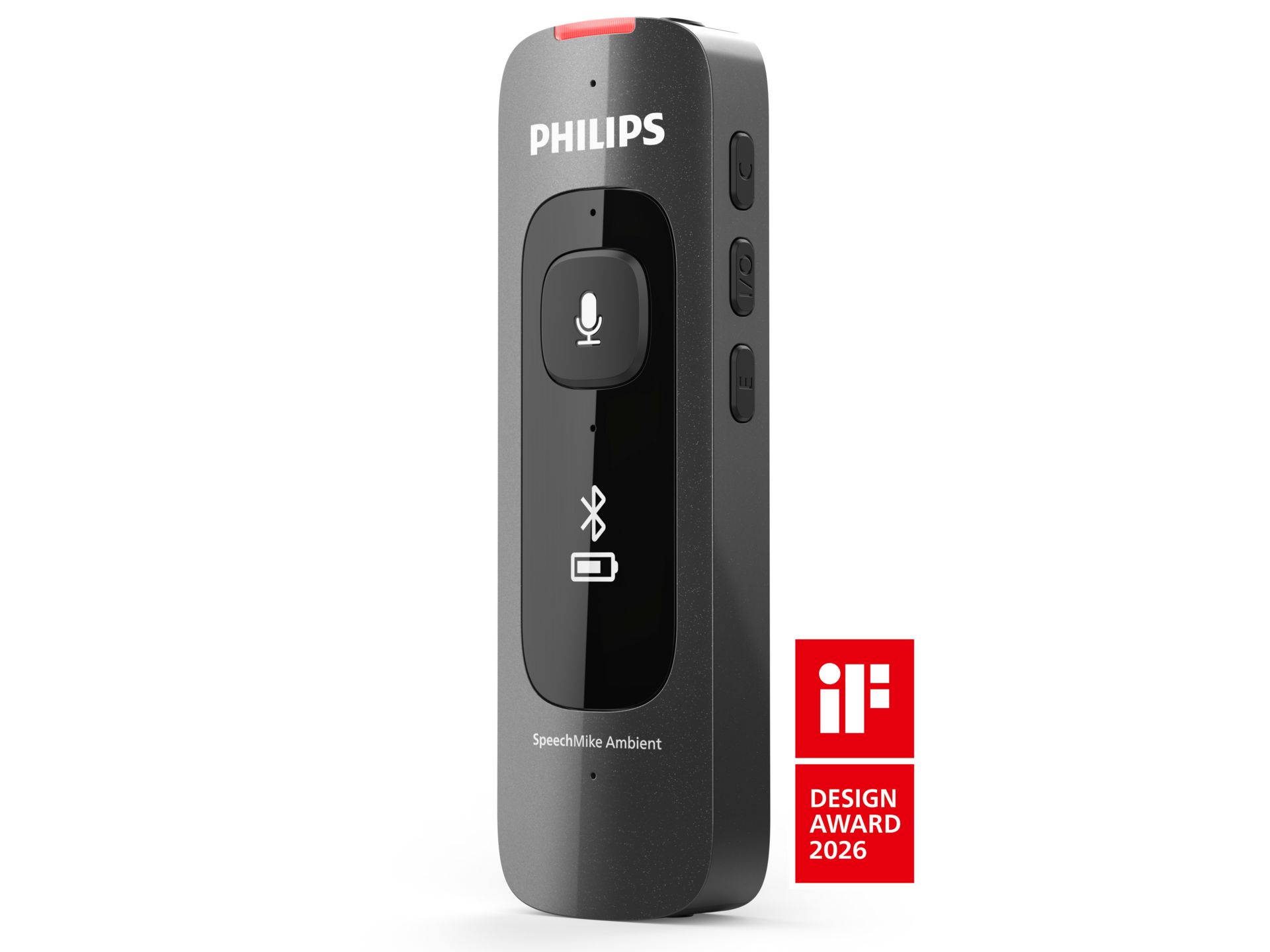
How Philips SpeechMike Ambient supports ambient AI workflows
Why AI voice recording is foundational for ambient healthcare documentation
Why does audio quality matter for ambient AI in healthcare?
Audio quality directly affects the accuracy of AI clinical documentation. Poor speech capture can lead to transcription errors, missing medical details, incorrect speaker attribution, and additional editing work for clinicians. Clear audio helps ambient AI systems generate more reliable documentation and summaries.
Ambient AI systems rely on speech recognition and large language models to process conversations between clinicians and patients.
If the AI receives incomplete or distorted audio, the output becomes less reliable. Background noise, inconsistent microphone positioning, and overlapping speech all reduce transcription quality.
Better audio creates better AI outputs.This becomes especially important in healthcare environments where documentation accuracy matters and conversations often happen in busy clinical spaces.
“Ambient AI workflows are only as reliable as the speech capture behind them.”
Healthcare organizations evaluating AI documentation tools should consider not only the AI platform itself, but also how speech is captured during patient encounters.
4 ways poor audio affects AI clinical documentation
Poor audio quality creates problems throughout the documentation workflow. Even advanced AI clinical assistants struggle when speech capture is inconsistent.
1. Important clinical details may be missed
Muffled speech or interruptions can prevent symptoms, medications, or diagnoses from being captured correctly.
This increases the likelihood of incomplete documentation.
In fast-paced healthcare environments, even small gaps in transcription can affect the quality of the final clinical note. Ambient AI systems rely on clear and continuous speech capture to accurately process patient conversations and generate reliable summaries.
2. Medical terminology becomes harder to recognize
Clinical conversations contain specialized terminology and medication names.
Background noise and unclear audio make transcription more difficult.
Healthcare speech recognition systems must process complex language quickly and accurately. Poor audio quality increases the likelihood of transcription errors, especially when clinicians use abbreviations, technical terminology, or uncommon medication names during consultations.
3. AI systems may confuse speakers
Ambient AI documentation systems often need to distinguish between clinicians, patients, and family members.
Overlapping speech can reduce speaker separation accuracy.
This becomes especially challenging during longer consultations or multi-speaker conversations. Reliable speaker separation is important for ambient clinical documentation because it helps AI systems preserve context and generate more structured outputs.
4. Clinicians spend more time editing notes
When transcription quality drops, clinicians need to manually review and correct documentation.
This reduces the efficiency benefits of ambient AI workflows.
Instead of reducing administrative burden, poor speech capture can create additional review work after patient encounters. Consistent AI voice recording helps improve documentation quality and supports more efficient workflows for healthcare professionals.
How audio issues affect AI documentation
Audio challenge
Impact on AI documentation
Background noise
Lower transcription accuracy
Distant microphone placement
Missed clinical details
Multiple speakers
Incorrect speaker attribution
Echo and reverberation
Reduced speech clarity
Inconsistent speech capture
More editing and corrections
5 common audio challenges in healthcare environments
Healthcare environments are difficult recording environments. Conversations happen in dynamic spaces with interruptions, movement, and multiple sound sources.
What are the biggest audio challenges for AI voice recording in healthcare?
Healthcare environments create challenges for AI voice recording because conversations happen in noisy and unpredictable spaces. Clinicians move throughout consultations, patients may speak softly or turn away, and multiple speakers often overlap during encounters.
Here are some of the most common issues.
1. Background noise in busy clinics and hospitals
Hallway conversations, keyboards, alarms, and medical devices all affect speech clarity.
Standard microphones may struggle to isolate speech from environmental noise.
Healthcare environments are rarely quiet or predictable. Wearable AI microphones designed for ambient workflows help prioritize direct speech capture and improve audio consistency in busy clinical settings.
2. Clinician mobility during consultations
Clinicians move between workstations, patients, and devices throughout the day.
This can create inconsistent speech capture when microphones are not positioned correctly.
Traditional desk-based recording setups are not always suited for mobile healthcare workflows. Wearable AI audio capture helps maintain more consistent recording quality as clinicians move naturally throughout patient encounters.
3. Multiple speakers during patient encounters
Patient consultations often include family members, caregivers, or interpreters.
AI systems need to distinguish between speakers clearly to create accurate documentation.
This is especially important for ambient clinical documentation workflows that rely on conversational context. Clear speaker separation helps AI systems generate more reliable summaries and structured clinical notes.
4. Inconsistent microphone positioning
Built-in laptop microphones or desk-based setups may capture speech inconsistently as clinicians move throughout the room.
Changes in microphone distance can reduce speech clarity and increase background interference. Consistent microphone positioning helps ambient AI systems receive cleaner audio throughout the consultation.
5. Consumer devices not designed for clinical workflows
Smartphones and standard conferencing microphones are designed for general communication.
Ambient AI documentation requires more consistent and reliable speech capture.
Clinical environments create very different audio challenges than standard office meetings or video calls. AI-powered dictation devices designed for healthcare workflows are better equipped to support continuous speech capture in real-world clinical environments.
Why wearable AI microphones improve speech capture
Wearable AI microphones improve ambient AI documentation because they keep speech capture consistent throughout patient encounters. By staying close to the clinician, wearable devices reduce background noise, improve speaker clarity, and support more accurate AI-generated documentation.
Traditional dictation workflows were designed around single-speaker recording.
Ambient AI workflows are different.
They require continuous speech capture during natural conversations between clinicians and patients.
This creates new audio requirements.
Why wearable AI microphones improve speech capture
Wearable AI microphones improve ambient AI documentation because they keep speech capture consistent throughout patient encounters. By staying close to the clinician, wearable devices reduce background noise, improve speaker clarity, and support more accurate AI-generated documentation.
Traditional dictation workflows were designed around single-speaker recording.
Ambient AI workflows are different.
They require continuous speech capture during natural conversations between clinicians and patients.
This creates new audio requirements.
Traditional dictation vs ambient AI workflows
Traditional dictation
Ambient AI workflows
Single speaker
Multiple speakers
Controlled dictation
Natural conversation
Stationary setup
Mobile workflows
Manual recording
Continuous capture
Post-visit documentation
Real-time documentation support
Wearable AI voice recording devices help address these challenges by keeping the microphone consistently close to the speaker throughout the consultation.
This improves audio consistency without disrupting patient interaction.
Consistency matters as much as clarity in ambient AI workflows.
6 best practices for AI voice recording in healthcare
Small workflow improvements can significantly improve AI documentation quality.
What is the best setup for AI voice recording in healthcare?
The best AI voice recording setup for healthcare uses wearable speech capture devices, consistent microphone positioning, hands-free workflows, and reliable noise reduction. These elements help ambient AI systems produce more accurate clinical documentation in busy healthcare environments.
1. Keep the microphone close to the speaker
Speech recognition performs best when speech is captured directly.
Distance increases background noise and reduces clarity.
Maintaining consistent microphone proximity helps improve transcription accuracy and reduce audio variability during consultations. This becomes especially important in larger rooms or busy healthcare environments where multiple sound sources compete with speech.
2. Use a wearable AI microphone
Wearable microphones help maintain consistent audio quality during mobile clinical workflows.
This supports more reliable AI transcription.
Because the device stays close to the clinician throughout the encounter, speech capture remains more stable even as clinicians move between patients, workstations, and devices.
Directional microphones and noise reduction technology help improve speech clarity.
Even small improvements to the recording environment can help ambient AI systems process conversations more accurately. Reducing unnecessary noise also helps improve speaker separation during patient encounters.
4. Support hands-free workflows
Hands-free capture allows clinicians to focus on patient interaction instead of device management.
This creates a more natural consultation experience while helping maintain consistent speech capture throughout the encounter. Hands-free workflows also reduce interruptions during documentation processes.
5. Use AI-ready speech capture devices
AI-powered dictation devices designed for ambient workflows are better suited for continuous speech capture than consumer-grade hardware.
These devices are designed to support real-world healthcare environments where mobility, background noise, and multi-speaker conversations are common. More reliable audio capture helps improve AI-generated documentation quality.
6. Choose workflows built for mobility
Healthcare professionals move throughout consultations.
Speech capture technology should support natural movement without affecting recording quality.
Mobile-friendly workflows help maintain consistent AI voice recording across different rooms, departments, and consultation styles. This supports more scalable and clinician-friendly ambient AI documentation processes.
How Philips SpeechMike Ambient supports ambient AI workflows
Ambient AI workflows require more than standard recording devices. They need speech capture technology designed for dynamic healthcare environments.
How does a wearable AI microphone improve ambient AI documentation?
A wearable AI microphone improves ambient AI documentation by keeping speech capture consistent during patient encounters. This helps reduce background noise, improve speaker clarity, and support more accurate AI-generated clinical notes and summaries.
Its wearable form factor supports hands-free speech capture during consultations while allowing clinicians to move naturally throughout the encounter.
Features such as beam-forming microphones, speaker separation, and advanced noise handling help improve speech clarity in busy healthcare environments.
This supports more accurate AI transcription and more reliable documentation workflows.
The SpeechMike Ambient also works naturally alongside SpeechLive Health, helping healthcare organizations securely manage recordings and support cloud-based documentation workflows across locations and devices.
Together, wearable AI speech capture and cloud-enabled workflow management create a stronger foundation for ambient AI in healthcare.
Why AI voice recording is foundational for ambient healthcare documentation
Ambient AI has the potential to reduce administrative burden and improve clinical efficiency.
But AI systems can only work with the information they receive.
If speech capture is inconsistent, documentation quality becomes inconsistent too.
That is why AI voice recording should not be treated as a secondary technical detail. It is a foundational part of the entire ambient AI workflow.
Healthcare organizations investing in AI clinical assistants should evaluate not only the AI platform itself, but also how conversations are captured in real clinical environments.
Clear audio improves transcription accuracy.
Better transcription improves AI outputs.
Better AI outputs reduce clinician workload and help create more efficient documentation workflows.
The future of ambient AI in healthcare depends on more than artificial intelligence alone.
It also depends on capturing conversations clearly from the start.
Table of contents
Why does audio quality matter for ambient AI in healthcare?
Four ways poor audio affects AI clinical documentation
How audio issues impact AI documentation
Five common audio challenges in healthcare environments
Why wearable AI microphones improve speech capture
Six best practices for AI voice recording in healthcare
How Philips SpeechMike Ambient supports ambient AI workflows
Why AI voice recording is foundational for ambient healthcare documentation