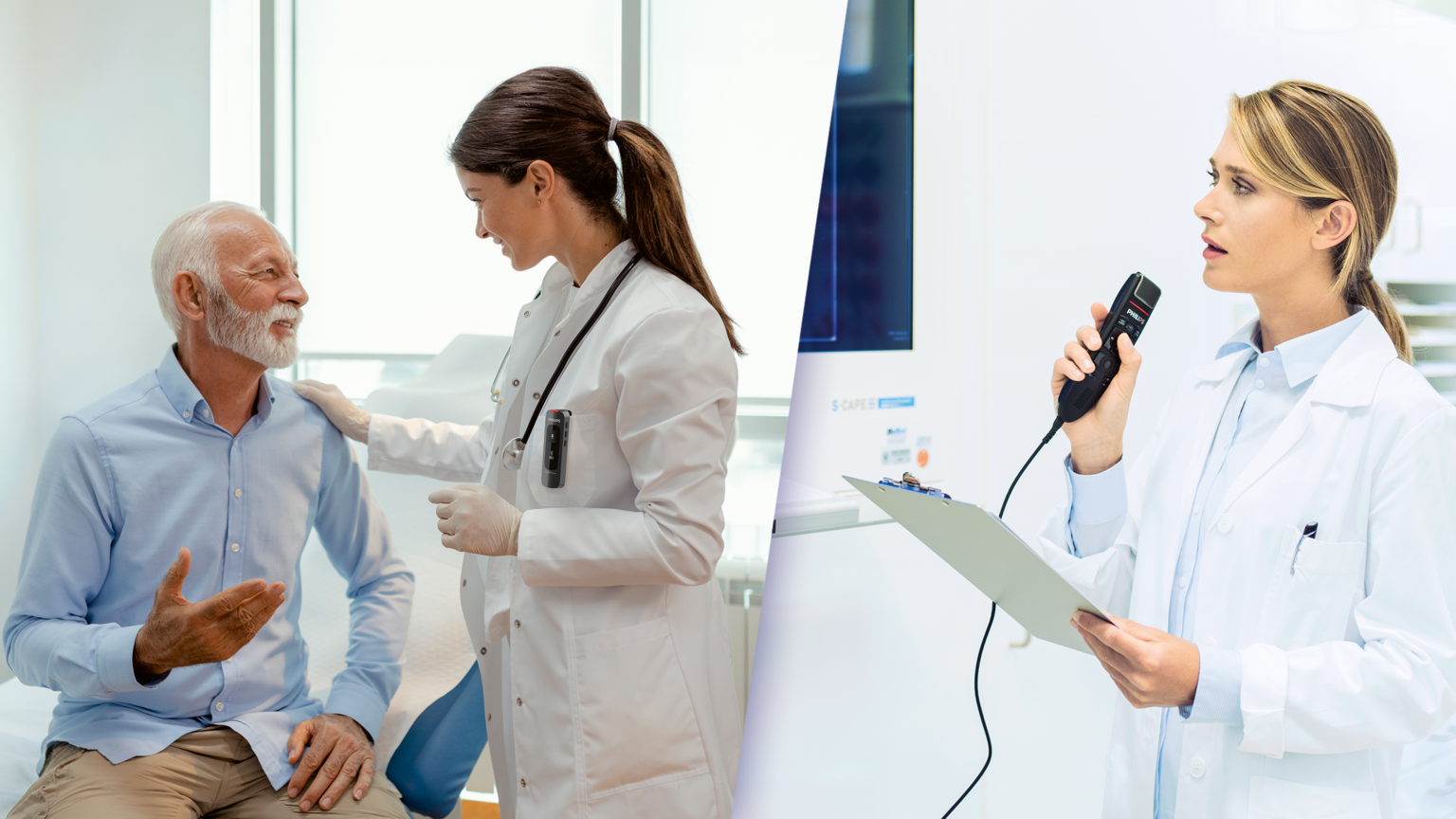
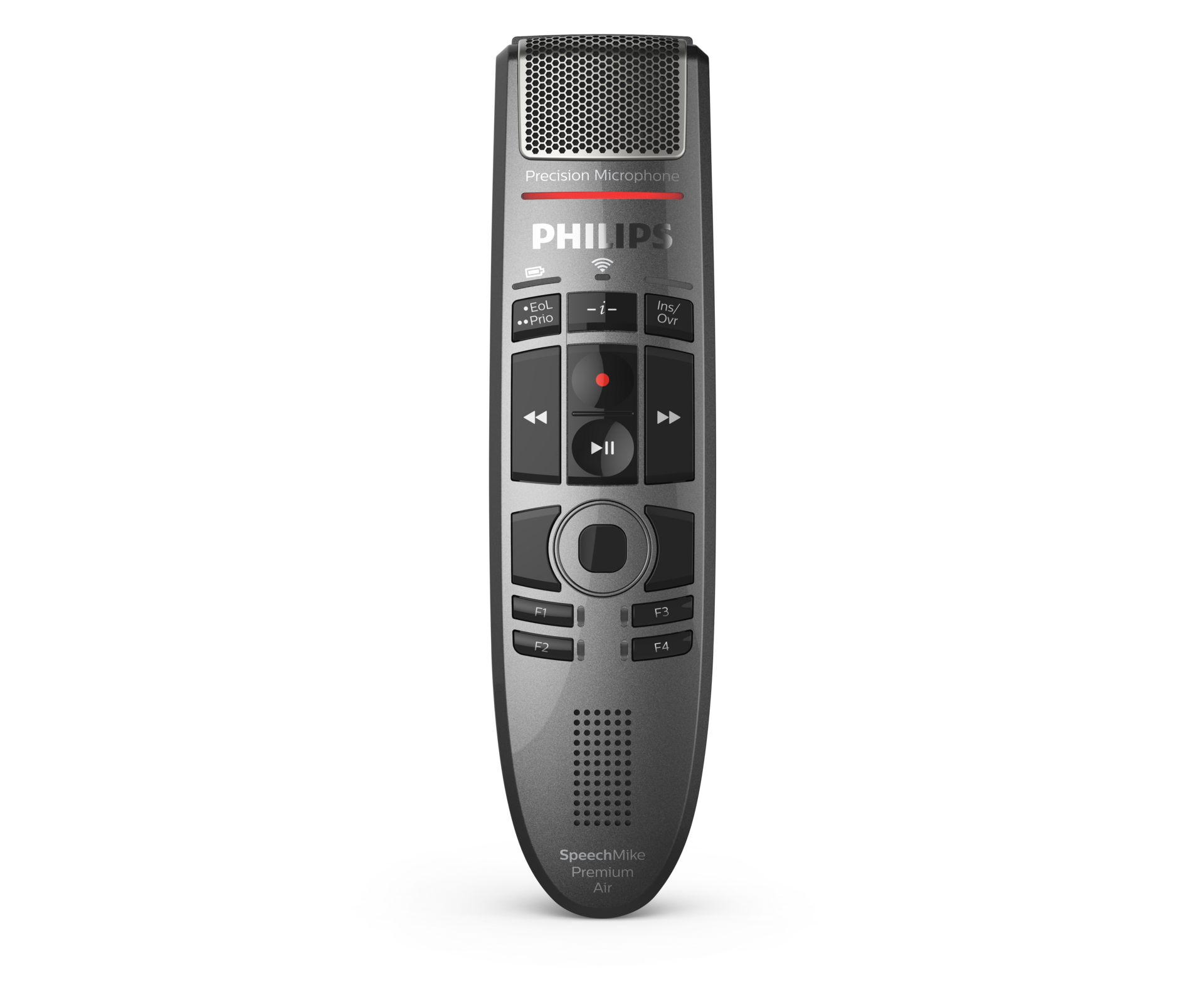
Philips SpeechMike Ambient and SpeechMike Premium are built for different workflows, while giving you the flexibility to manage both conversations and dictation with ease.


In today’s workflows, capturing speech is no longer limited to traditional dictation. Professionals increasingly move between structured dictation and real-world conversations – from writing reports to recording meetings, consultations, or interviews.
Philips SpeechMike Ambient and SpeechMike Premium are designed for different primary workflows but both give you the versatility to handle conversations and dictation with ease.
The key difference is not what they can do but what they are optimized for.
When selecting a speech recording device, the most important question is simple: What do you do most of the time?
Do you primarily record conversations, meetings, or multiple speakers?
Or do you mainly dictate reports, notes, or documentation?
Both scenarios require high-quality audio and seamless speech recognition but they place very different demands on how audio is captured.
Download the one-page comparison guide to see both devices side by side.
Built for conversations
Philips SpeechMike Ambient Wearable AI Assistant is designed for dynamic, real-world environments, where capturing natural conversations is key.
Whether it’s a client meeting, medical consultation, or interview, it enables:
At the same time, it still supports traditional dictation and speech recognition when needed—making it ideal for users who primarily work with conversations but occasionally dictate.

Built for precision dictation
The Philips SpeechMike Premium Dictation Microphone is the go-to device for focused, high-quality dictation.
It is optimized for:
With the introduction of a new conversation mode, selected devices now also support capturing conversations at a desk. The integrated motion sensor automatically switches between Dictation and Conversation Mode, ensuring optimal performance without manual adjustment.

While each device is optimized for a different starting point, both are designed to adapt to real-world workflows:
This means users don’t have to choose between flexibility and performance, they get both.
If you’re unsure which device is right, use this quick rule of thumb:
Either way, you stay flexible for everything else.
The way we capture speech is evolving. Workflows are no longer one-dimensional—and your tools shouldn’t be either.
By focusing on your primary workflow, you can choose the right starting point while keeping the flexibility to handle more.
Download the one-page comparison guide to see both devices side by side.
4 min
Philips SpeechLive Legal AI Assistant helps legal professionals turn dictation and supporting information into structured document drafts using their firm’s own templates. Discover how the new…
5 min
Clinicians are spending too much time on documentation and not enough with patients. Philips SpeechLive Health AI Assistant changes that by turning natural conversations into structured clinical notes…
4 min
Medical dictation software – once limited to simple speech-to-text systems – has already evolved dramatically. There is a growing need for faster, more accurate and integrated medical dictation tools.…